Roanoke Colony
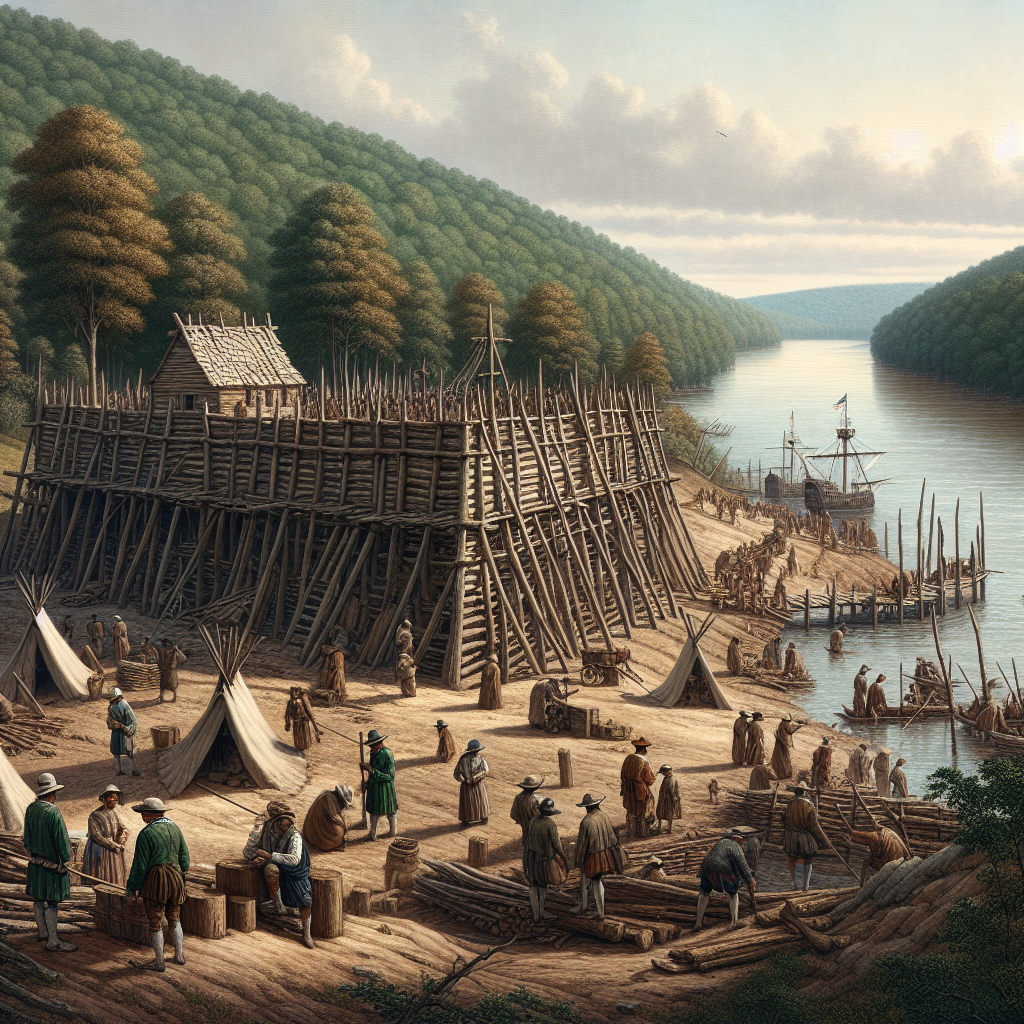
In July 1587, the English settler John White landed 115 colonists on Roanoke Island, on the leeward side of the Outer Banks of present-day North Carolina, under the patent Sir Walter Raleigh had received from Queen Elizabeth I. The colony was a second attempt; an earlier military outpost on the same island in 1585 had collapsed within a year, with the survivors sailing home with Sir Francis Drake. The 1587 expedition was supposed to be different — families, not soldiers, with the explicit goal of permanent settlement, and a relocation north to the Chesapeake that the pilots refused to make. White's granddaughter Virginia Dare, born on the island in August 1587, was the first child of English parents born in the Americas.
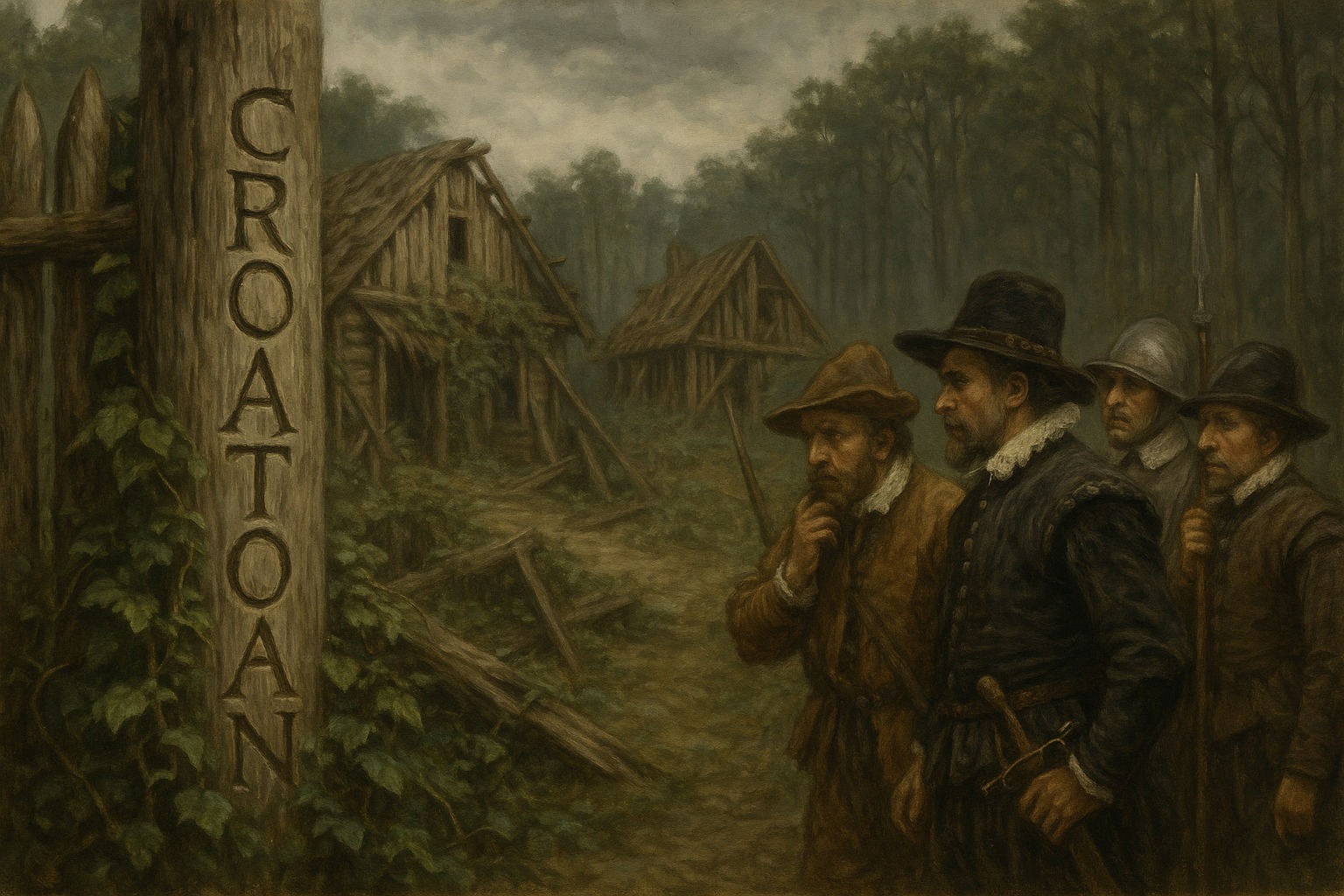
White sailed for England the same month to organize a relief mission, expecting to return within months. The Spanish Armada's campaign of 1588 delayed every English Atlantic voyage. White could not get back to Roanoke until August 1590 — three years late. The settlement was deserted, the houses dismantled, no sign of struggle or burial. The only clues were the word "CROATOAN" carved into a palisade post and the letters "CRO" carved into a tree, both pre-arranged signals indicating where the colonists had gone. A storm and his pilots' refusal to make a second pass prevented White from sailing to Croatoan Island, fifty miles south, to look for them. He never returned.
No conclusive evidence of the colonists' fate has ever been found. The most widely accepted scholarly explanation is that they relocated, possibly to Croatoan (modern Hatteras) Island, and integrated with the local Algonquian community — a theory supported by sixteenth-century European-style artifacts excavated there, by oral traditions among the Lumbee of inland North Carolina, and by John Smith's reports a generation later of grey-eyed and fair-haired Indigenous people in the interior. The Lost Colony has remained one of the most durable American mysteries — endlessly speculated about in novels, theories, and outdoor dramas — in part because it neatly inverts the founding myth: not English settlers persisting against odds, but English settlers absorbed and erased by the Indigenous world they had hoped to displace.
| Settled | July 1587 — Roanoke Island, NC |
| Found abandoned | August 1590 |
| Colonists | 115 settlers under Governor John White |
| Patron | Sir Walter Raleigh (patent from Elizabeth I) |
| First English child in Americas | Virginia Dare — born August 18, 1587 |
| Clue left behind | CROATOAN carved on a post; CRO on a tree |
| Delay cause | Spanish Armada (1588) blocked relief |
| Date | Settlement: July 1587 · Discovered abandoned: August 1590 |
| Location | Roanoke Island, North Carolina |