Modern America
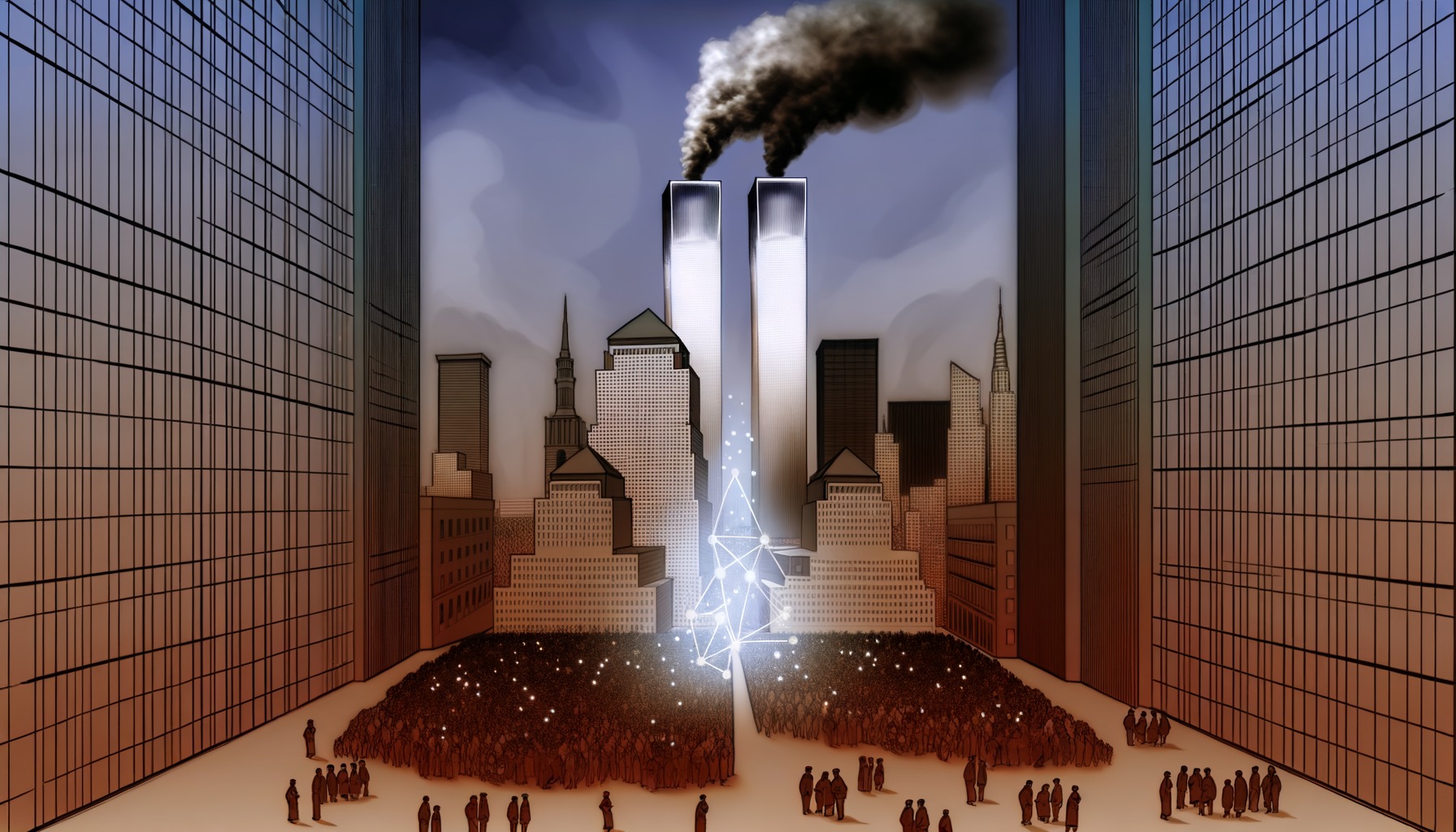
The Soviet Union dissolved in December 1991, ending the Cold War that had defined American politics, economics, and foreign policy for 46 years. Within a decade the United States was being described as the world's sole superpower — the "unipolar moment" — and Americans were assured that liberal democracy and free-market capitalism had won permanently. Within another decade those certainties had collapsed. The September 11 attacks of 2001 launched two long wars, the 2008 financial crisis discredited the deregulated economic order, and the rise of China challenged the assumption that American power was self-sustaining.
Domestically, the era was defined by deepening political polarization and the social changes the previous generation had set in motion. The internet, commercialized in the mid-1990s, restructured nearly every American industry and reshaped daily life. Same-sex marriage, illegal in every state in 1991, was protected nationwide by Obergefell v. Hodges in 2015. The election of Barack Obama in 2008 marked the first Black presidency. The election of Donald Trump in 2016 — and the political movement he led — represented the most direct challenge to post–Cold War American liberal consensus since the consensus had formed.
The COVID-19 pandemic of 2020–2022 killed more than a million Americans and triggered the largest emergency government intervention since World War II. The January 6, 2021 attack on the U.S. Capitol — the first significant disruption of a presidential transfer of power in American history — broke a precedent set by John Adams in 1801. By the mid-2020s, questions that had seemed settled were openly contested: the structure of the courts, the legitimacy of elections, the size and role of the federal government, and the country's basic relationship with the rest of the world.
The era's defining feature may be its refusal to settle into a narrative. Earlier American periods — Reconstruction, the Progressive Era, the New Deal era — were named and analyzed decades after they ended. Modern America is still being lived, and its participants disagree about what it has been about: the triumph of American power, the unraveling of American consensus, the broadening of American citizenship, the failure of American institutions, or some combination of all of these. What is clear is that the post–Cold War order American leaders proclaimed in 1992 no longer describes the country, the world, or the relationship between them.
| Duration | 1991 – present |
| Soviet Union dissolves | December 26, 1991 |
| September 11 attacks | September 11, 2001 |
| Iraq War | 2003–2011 |
| Global Financial Crisis | 2008 |
| Obergefell v. Hodges | June 26, 2015 |
| COVID-19 pandemic | 2020–2022 |
| January 6 Capitol attack | January 6, 2021 |
| Date | December 26, 1991 – present |
| Location | United States |